Cognac-Flambéed Pudding Recipe Gluten-free and dairy-free (casein-free)
By: Cuisine l'Angélique
PORTIONS: 15
ORGANIC INGREDIENTS
PUDDING :
- 3 large eggs (165 g)
- 180 g (1/2 cup) molasses
- 110 g (1 cup) light brown sugar
- 130 g beef tallow, very finely chopped or softened butter if you don't follow a diet excluding dairy products (measurement is given in grams for accuracy)
- 85g (1/3 cup) strong coffee brewed in a percolator
- 2.5 ml (1/2 tsp) baking soda
- 420 g (3 cups) all-purpose flour "La Merveilleuse"
- 7.5 ml (1 1/2 tsps) baking powder
- 5 ml (1 tsp) salt
- 2.5 ml (1/2 tsp) ground cinnamon
- 2.5 ml (1/2 tsp) ground cloves
- 2.5 ml (1/2 tsp) ground nutmeg
- 320 g (2 cups) Thompson raisins
- 150 g (8 oz) candied fruit
- 75 g (4 oz) candied fruit zest
- 50 g (4 oz) slivered blanched almonds
FLAMBE UPON SERVING:
- 65 to 125 ml (1/4 to 1/2 cup) Grand Marnier or Cognac, to taste and depending on the size of the pudding
ACCOMPANYING SAUCE:
- 220 g (1 cup) sugar
- 30 ml (2 tbsp) all-purpose flour "La Merveilleuse"
- 30 ml (2 tbsp) margarine or butter (if you don't follow a diet excluding dairy products)
- 500 ml (2 cups) boiling water
- 30 ml (2 tbsp) lemon juice, freshly squeezed
- 2.5 ml (1/2 tsp) lemon zest
- Grated nutmeg, to taste (about 2.5 ml (1/2 tsp) or more)
PREPARATION
You can prepare your pudding 2 to 3 weeks in advance and store it in the refrigerator.
- Grease a plum pudding pan with a total capacity of 2.5 litres (10 cups). See possible mould alternatives.
- Fill a large roasting pan with water halfway up, put a rack at the bottom then place the roasting pan across 2 burners of the stove, cover and bring the water to a boil and then turn off the heat. The pudding will steam in the roasting pan.
- In a medium bowl, using an electric mixer, beat the eggs. Add molasses and brown sugar and continue beating until creamy.
- Add tallow, coffee and baking soda. Mix gently with a whisk and let stand for 15 minutes. Note: If using butter, add butter first, beat with an electric mixer, then add coffee and baking soda and finish gently mixing with a whisk.
- Meanwhile, in a large bowl, combine flour, baking powder, salt and spices. Once the dry ingredients are well mixed, add the raisins, fruit and candied zest and almonds and stir again, using a wooden spoon, so that all the ingredients are evenly distributed in the flour.
- Add the liquid mixture to the dry ingredients and mix well with a wooden spoon until the dough is uniform.
- Spread the dough evenly in the pan, pressing well, if necessary, with slightly wet fingers. The mould should not be filled more than 2/3 because the dough will swell when cooked. If your mould is not large enough for the entire amount of dough, use more than one mould (see other mould alternatives).
- Cover the mould with the lid or with 2 layers of aluminum foil, held in place by a tight elastic. The important thing is to create a seal that prevents steam from getting to the dough. Even if you have a proper lid for the pan, first put a layer of aluminum foil and then the lid; this optimizes the waterproofing.
- Bring the water back to boiling in the roasting pan. As soon as it comes to a boil, place the pudding pan in it. Water must reach 2/3 of the height of the mould; adjust as needed by adding or removing water. Cover, again bring to a boil then simmer over low heat (make sure the water really simmers). During cooking, check the water level and adjust as needed.
- Depending on the size of the pudding, the cooking time may vary from 1 to 3 hours. If you have divided the pudding into 3 moulds, check after 1 hour; If you have divided the pudding into 2 moulds, check after 1 hour and 30 minutes and after 2 hours if the pudding is in a single pan. The pudding will be ready when a toothpick inserted in the center comes out clean (the same principle as a cake but take care to not overcook).
- Allow the pudding to cool on a wire rack without unmoulding, but removing the lid or aluminum foil. To prevent the top from drying out too much, simply cover with a dry dishcloth.
- When cooled, unmould (make sure the pudding is not glued to the mould by gently passing the blade of a knife all around) and wrap in 2 layers of aluminum foil (to avoid aluminum contact, simply put waxed paper or parchment first). Keeps in the refrigerator for 2 to 3 weeks.
DAY OF SERVICE:
Remove from the refrigerator on the morning of the serving day, to bring to room temperature. Make the accompanying sauce.
ACCOMPANYING SAUCE:
- In a small saucepan, combine sugar and flour and mix well. Place margarine (or butter) on top.
- Add boiling water and whisk.
- Cook over medium-low heat, stirring constantly with a whisk until thickened. Then add the lemon juice, zest and nutmeg. Taste and adjust, if needed.
- If you want a slightly thicker sauce, simply add 15 ml (1 tablespoon) of organic cornstarch (blended in the same amount of water). Bring gently to a boil, stirring constantly, until thickened.
- Serve this hot sauce on the pudding.
TO SERVE:
- To serve, you will have to unwrap the pudding, put it back in the mould, and reheat it in the same way it was cooked (covering the top, of course).
- When the pudding is hot, turn it over on a serving plate. Bring the alcohol to a boil, pour it into a sauce dish (warm it up in hot water to avoid hot-cold contact). Flame the alcohol with a lighter, turn off the lights of the house... then gently pour over the pudding. The magic of this beautiful blue flame will amaze everyone!
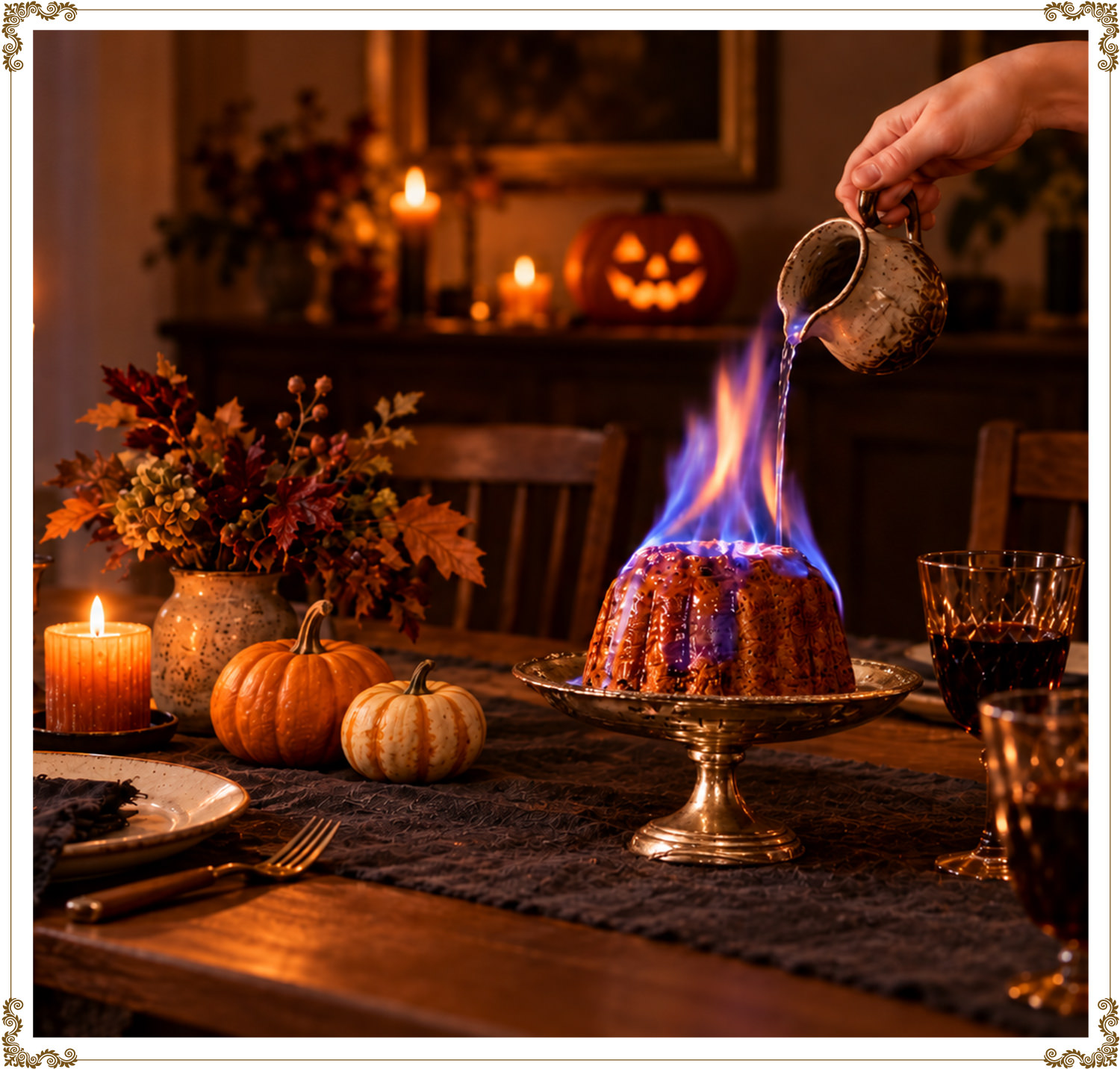
A recipe that will thoroughly impress your guests! The magic of the beautiful blue flame will dazzle everyone!


A-Traditionally, this recipe was prepared with finely chopped beef tallow. If you want to use beef tallow, you can get it directly from your butcher. You can also use butter instead.
B-The dough in the traditional plum pudding mould


C-Pudding cooked in small ceramic bowls
D-Pudding once unmoulded
MOULD ALTERNATIVES

A plum pudding mould with a total capacity of 2.5 litres (10 cups)
If you don't have a specific plum pudding mould, you can still make this recipe!
Simply use one of these alternatives:
- A large ceramic bowl
- 2 to 3 ceramic bowls
- 2 empty coffee cans
Note: You will need one or more containers with a total capacity of 2.5 litres (10 cups).
And there you go, you can prepare this tasty recipe!